
Some of the world’s biggest, and well paid, CEOs have been up to no good... Find out why with our bi-weekly round up of Mark Ritson's latest columns
From pretending to enjoy their flagship burger on camera, announcing the death of traditional mass-reach advertising and moving their company from a house of brands to a branded house, and back again. The actions of these CEOs have ruffled a few feathers and potentially damaged their share price too.
In better news, Mark has joined forces with the wonderful leader of Ipsos, Kelly Beaver to preview their new report, ‘Marketing Anchors.’ Following in-person events in the UK and US, the full report will be available from 19 March 2026.
Register to receive your copy here: Marketing Anchors: The case for capability in an era of transformation.
"The most important marketing story of 2026,” the global report reveals some troubling insights from their interviews with 1,500 marketers about the current state of marketing – and what our industry can do to turn things around.
ADWEEK: The McDonald’s CEO Can't Seem to Stomach His Own Burger
Read the full article on ADWEEK
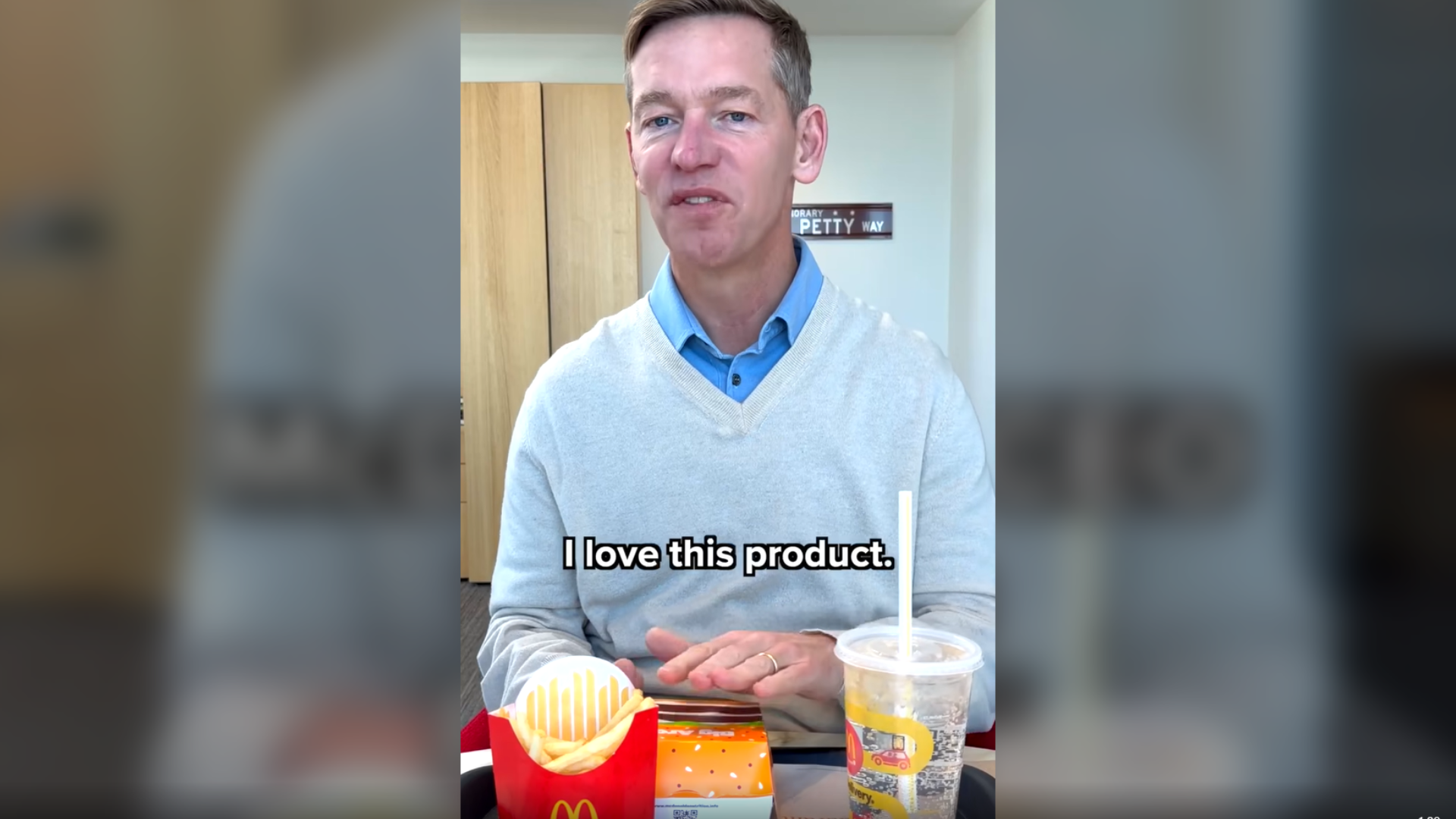
No doubt you’ve seen the McDonald’s CEO, Chris Kempczinski, ‘enjoying’ the new Big Arch burger on your newsfeed recently.
What started as a promising marketing moment, the CEO, the flagship product and the authentic feel of the video, quickly turned sour. In the video, his first (and only) unconvincing bite of the burger told us everything we need to know about how often this CEO consumes his own product.
When we compare this to the likes of Warren Buffet, who drinks five cans of coke a day, and happens to own 400 million Coca-Cola shares worth $20 billion. “He doesn’t drink Coke because he owns shares. He owns shares because he drinks Coke.”
Or Akio Toyoda, the Chairman, ex-CEO and grandson of the Founder of Toyota, who would race his product in a 24-endurance race under an alias.
“Buffett and Toyoda built great companies partly because they closed the distance between their lives and their products. It made them better leaders.”
Kempczinski is an effective CEO and McDonald’s has performed strongly under his lead. But this video, and the onslaught it got on social media, put a huge spotlight on him and how far away he sits from McDonald’s products.
“This is the central tension of the modern CEO. The higher you rise, the further you get from the thing you sell. You earn $20 million a year, for selling a combo meal that costs nine bucks.”
“You know your product intimately as a concept – its market share, brand equity, net promoter score – but you stop knowing it as a thing you shove in your mouth on Tuesday when you're shitfaced.
So often, businesses forget the most important P in the 4Ps is product. In the MiniMBA in Marketing, we have a whole module for it and have trained over 40,000 marketers how to properly manage it, with the customer in mind.
The Drum: Micro-influencers work. But they aren't a substitute for brand building
Read the full article on The Drum
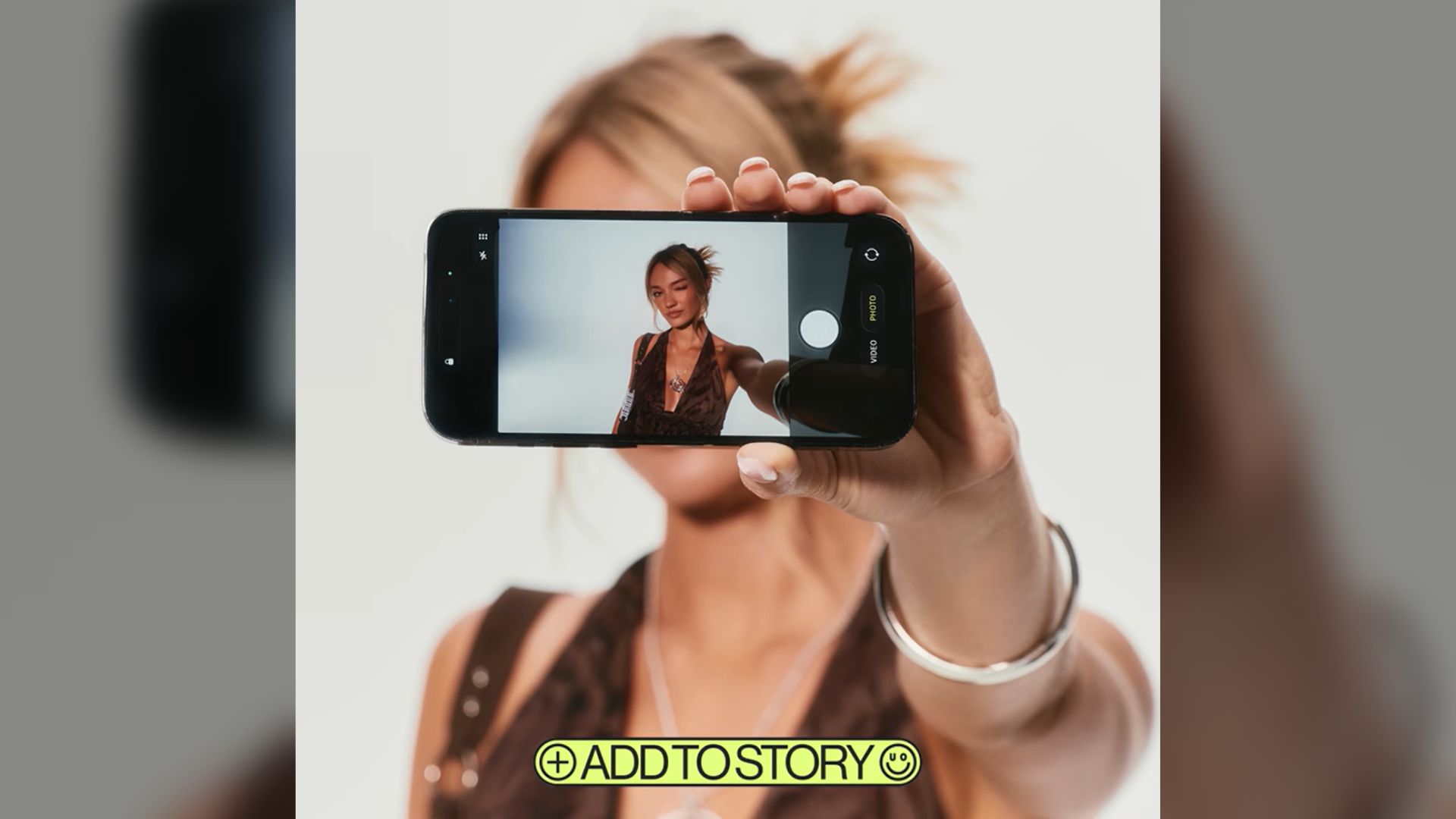
In recent weeks, brands like Urban Outfitters, Sephora and American Eagle have launched micro-influencer programmes, but Mark implores brands to keep a close eye on salience, equity and overall control of their brand message.
There is significant research to suggest micro-influencers, those with fewer than 100,000 followers, outperform their celebrity counterparts on engagement.
Think Kylie Jenner and her 400 million followers. “Kylie has more raw reach. But the micro-influencer army delivers far greater engagement. And their granularity lets me target only those who post in brand-relevant categories with genuine audience fit.”
Vaseline have also worked with micro-influencers. They noticed creators were posting different uses and hacks for their petroleum jelly and instead of trying to control the narrative, they gave it a quiet nudge. Their co-created content featuring Unilever scientists achieved 136m social views, a 43% sales uplift and 87% positive sentiment.
With digital streaming and platforms also fragmenting the once great mass-reach television, brands are relying on influencers to reach younger demographics.
But it’s not all sunshine and rainbows, there are some downsides. First, working with micro-influencers makes distinctive brand assets and the brand message diluted and harder to manage.
“A hundred micro-influencers, each talking to their own small community in their own organic voice, is a low-salience activity. The brand’s distinctive assets – the colours, the characters, the sonic identity – are filtered through a hundred different aesthetic sensibilities.”
Also, though celebrity endorsements like Kylie might not be as effective in terms of engagement, they create a ‘big by association’ effect which improves brand perception and equity.
Whilst micro-influencer campaigns are generating some exceptional ROI, brands must remember that infiltrating small pockets of the internet does not equate to mass-market reach.
“The brands succeeding with micro-influencers are the ones who understand that distinction and still appreciate the role that other media must play in building long-term growth.”
Influencer marketing forms an important tactic for many brands these days, but brands who do so at the cost of brand advertising will suffer. Read Mark’s 5 steps to proper advertising.
ADWEEK: The Unilever CEO Has a New Marketing Doctrine, and It Is Completely Wrong
Read the full article on ADWEEK
Sticking with a theme of influencer marketing, Unilever CEO Fernando Fernandez told investors that “times of big corporate big brand messages are gone” and that the company will replace traditional advertising with an army of creators, at a conference last month.
This is a bold claim and frankly, one CEOs do not make often, let alone in public.
“The tactical specifics are usually left to the CMO because it’s their job to handle it, and because a CEO publicly freelancing about advertising trends usually culminates in embarrassment. Fernandez, apparently, did not get the memo.”
Beyond this being an odd move from Fernandez, let’s look at why his declaration is also way off the mark.
First, the increase from 30% to 50% investment in influencers is big. However, based on Unilever’s full-year 2025 results, that still means $4 billion on traditional mass-reach advertising. “That’s a giant advertising budget sitting in the very format Fernandez has declared deceased.”
Second, Fernandez flagged Unilever’s sponsorship of the 2026 FIFA World Cup, a marketing tactic which sits firmly in the mass-reach department. “The kind of big, corporate, broadcast brand messages he had just told investors, seconds earlier, was finished.”
Whilst Vaseline saw remarkable results with its influencer campaign, that does not mean Unilever’s 399 other brands will have the same success, because every brand and market is inherently different.
Unilever tried do the same when a previous leader declared every brand needed a social purpose, which is fine for Ben & Jerry’s but not fine for Pot Noodle. “The purpose mandate became as uncomfortable as it was naive, and Unilever eventually reversed course.”
We’re not sure what Unilever’s marketing communications will look like in the coming months, but we do know that putting all your eggs into one tactical basket is never the answer. “Integrated marketing communications is not just a theoretical nicety in a textbook. It is how effective advertising actually works.”
Integrated Marketing Communications (IMC) isn’t a nice to have. A consistent marketing message, delivered across several, integrated marketing channels has been proven as the most effective way to reach and convert your customers.
Learn more in Module 9: Marketing Communications of the MiniMBA in Marketing, which starts next month.
The Drum: WPP cannot be both a branded house and a house of brands
Read the full article on The Drum
Coming up next on an episode of ‘crazy CEO announcements’, Cindy Rose told the world that WPP is moving from a holding company (with brands like Ogilvy, VML and Mindshare), to a branded house.
WPP will now operate as a single company with four divisions: WPP Media, WPP Creative, WPP Production, WPP Enterprise Solutions.
It seems WPP has been in a state of flux for some time. Rose is the third CEO in eight years. In which time there has been three restructures and the headcount has fallen from 130,000 to 100,000. The average tenure of WPP’s senior management team is around 1.2 years, though WPP dispute this figure.
“You cannot build anything in 1.2 years. You cannot understand a client’s business in 1.2 years. You certainly cannot execute a multi-year brand strategy in 1.2 years. And yet WPP would like you to believe it can do all three of those things for you, at considerable expense, while apparently being unable to do any of it for itself.”
What is more surprising is WPP’s lack of strategic focus. Rose announced the company will now operate as a single entity, whilst also stating they are not merging or consolidating agency brands. Come again?
No doubt this news sends an unsettling message to employees who have already experienced immense change, and an even bigger message to clients. “It says: the team you briefed last year may not be here next year.”
Clients are noticing. Mars, Paramount and Coca-Cola North America have all left for Publicis, WPP’s 2025 revenue fell 8% year on year, and operating profit is down 23%.
Most hilariously of all, WPP’s core commercial proposition, what it charges businesses millions of pounds a year to deliver, is long-term strategy. Brand, equity, salience, built consistently over time.
“And yet WPP cannot apply a single one of these principles to itself. It is getting strategy wrong. It is getting change management wrong. It is getting brand architecture wrong. It is getting corporate communications wrong.”
Don’t be like WPP. Learn the fundamentals of brand architecture and how to manage your brand effectively in Module 8: Brand Architecture of the MiniMBA in Brand Management.
Images (from top): McDonald's, Urban Outfitters (ME@UO), asaffsouza/Adobe Stock, WPP