
From an intelligence assistant’s complete lack of intelligence to the marketing industry’s need for creative newness, Mark Ritson’s latest columns take aim at some of marketing’s biggest questions
Why does a once-revolutionary product now feel so far behind? Why has the sales funnel survived every attempt to kill it? What really makes a creative director right for a fashion house?And when a brand has an all-time classic ad in the archive, why remake it at all?
Mark explores failed product features, strategic frameworks, brand DNA and creative effectiveness, with his usual (and always articulate) dose of sardonicism.
The Drum: It doesn’t take a genius to know Siri is a moron. She is doing Apple no favours

When Siri, Apple’s voice-powered ‘Intelligence Assistant’ came on the scene in 2011, it took the world by storm. “I remember being genuinely astonished by her capabilities. She could tell me what time it was in Tokyo. She could translate “where is the bathroom” into passable French. She could tell me a joke, albeit a terrible one.”
But, unfortunately for Siri, technology has advanced a lot since 2011. Even though her capability has improved tenfold since then, she is noticeably behind her intelligence counterparts, Claude and OpenAI.
“Siri is a moron. She has almost no ability to answer anything I ask of her these days. And I just end up frustrated, increasingly convinced that Apple is not the company I once thought it was.”
Mark likens Siri to Yo! Sushi, the conveyor belt sushi restaurant chain in the UK. What was once Mark’s regular lunch spot in London, turned into a disappointing downgrade after he spent three weeks in Tokyo. Context is everything.
What’s interesting isn’t Siri’s innate stupidity, it’s that she is now miles behind the competition when Apple should be at the forefront of AI.
“Their entire brand proposition rests on three things: technology, humanity, and simplicity. Tech that works. Tech that feels human. Tech that does things implicitly and proactively. Siri is the product that should make those three promises come alive every single day. Instead, she destroys them with her inane, repeated uselessness.”
In Apple’s defence, they take privacy seriously. It’s on-device processing philosophy means your data isn’t sucked up into the cloud, like the big AI systems that are cloud-based and hungry for data. Whilst this is a good thing for consumers, and a genuine differentiator, it’s putting Apple last place in the intelligence rat race.
Apple needs to go back to the drawing board with Siri. In the MiniMBA in Marketing, we teach how to develop new products, improve existing ones, kill and condense the portfolio when necessary.
The MiniMBA in Marketing includes ten on-demand modules led by Professor Mark Ritson, covering the complete marketing framework from market orientation to distribution.
ADWEEK: The Cockroach of Marketing Concepts Will Never Die

Whilst many have tried over the years, no one has been able to kill the ‘cockroach of marketing concepts’, the sales funnel.
In 1898, Elias St. Elmo Lewis was working on life insurance campaigns and noticed the best salespeople followed a specific pattern. “They grabbed attention, built interest, created desire, and then prompted action. He called it AIDA.”
There have been many critiques of the sales funnel since then, but it has survived them all...
The first critique is that the stages are too generic. How does awareness, consideration, preference and purchase relate to my unique business?
“If you’re running your marketing against a generic funnel pulled from a textbook, you’re doing it wrong. The solution is to build your own funnel.” Look at your sales cycle, get engrained in every step your customers take, and map a funnel that reflects how your market behaves.
Second, the funnel is too linear. “Consumers don’t walk in an orderly line from unaware to loyal advocates They jump around. They become aware of something, ignore it for two years, stumble on a Reddit thread, read three reviews, and buy on impulse while sitting on a train.”
But we're not trying to track individual movements; we are trying to track how many consumers sit at each stage of the funnel at any given moment, and where the biggest gaps are between stages.
The third critique is that tech has flattened the funnel. Consumers can go from having never heard of you to purchasing with one TikTok ad. This argument confuses tactics with diagnosis. The funnel is there to help you visualise where consumers sit within your market so you can choose the right tactics accordingly.
Fourth, the funnel ignores everything post-purchase. Rather than being a point against sales funnels, this critique highlights the importance of customising your funnel to match your customer journey.
“Any serious practitioner builds loyalty and advocacy stages onto the bottom and tracks movement there just as rigorously as above the purchase line.”
Lastly, the funnel is merely used to order pitch decks into upper, middle and lower funnel activity. In response to this, Mark says “the funnel should drive your marketing strategy, not emerge from your media agency’s proposal.”
The sales funnel is a crucial tool when setting smart objectives based on empirical data and will help you focus on the parts of your buying journey that will give the most return.
Learn more about the sales funnel and how to build your own custom funnel on the MiniMBA.
ADWEEK: The Job That Broke Gucci Also Built Hermès

The role of creative director holds more weight and influence in fashion than in any other industry.
“In an industry where the product is aesthetics and the currency is desire, the person who decides what the clothes look like, how they feel, what they mean and how they are presented shapes everything.”
Creative directors make or break fashion houses, and Mark explains there are 3 attributes they must have to succeed.
They must have commercial instinct. “The ability to produce work that generates desire at the price points the house needs, not just desire among critics and editors.”
They must have industrial stamina. Managing a design studio and producing upwards of six collections a year, including advertising campaigns, press coverage, collaborations and store concepts.
Lastly, and harder to find, is fit with the brand’s DNA. “Genuine fluency in what the house has always been about. An ability to understand the brand’s language before attempting to speak new sentences.”
Let’s take Gucci. When Tom Ford joined in 1994, the company was losing $22 million a year. In his first year, sales grew by 90% and a decade later, annual revenues had gone from $230 million to $3 billion.
Fast forward to today, Gucci has burned through four creative directors in a decade and appears in trouble, again.
Will the recent appointment of Demna, who spent 10 years at Balenciaga building his reputation on subversion, irony, and deliberate ugliness, be able to turn Gucci around? A house whose DNA runs on Italian sensuality, sex appeal, and unapologetic excess.
“Ford turned Gucci around in 1994 because the brand still had an identity to rescue and the edge of the Fifties and Sixties he could reach back and retrieve. The question nobody can answer yet is whether Gucci, after this many reinventions, still has that kind of bedrock to build from.”
Like many luxury industries, a fashion house’s DNA is made up of its history and heritage. In Module 3: Brand Diagnosis of the MiniMBA in Brand Management, Mark teaches how to generate qualitative and quantitative insights to better understand and relate with your brand.
The Drum: Coca-Cola’s great ‘Hilltop’ homage doesn’t reach the heights of the original
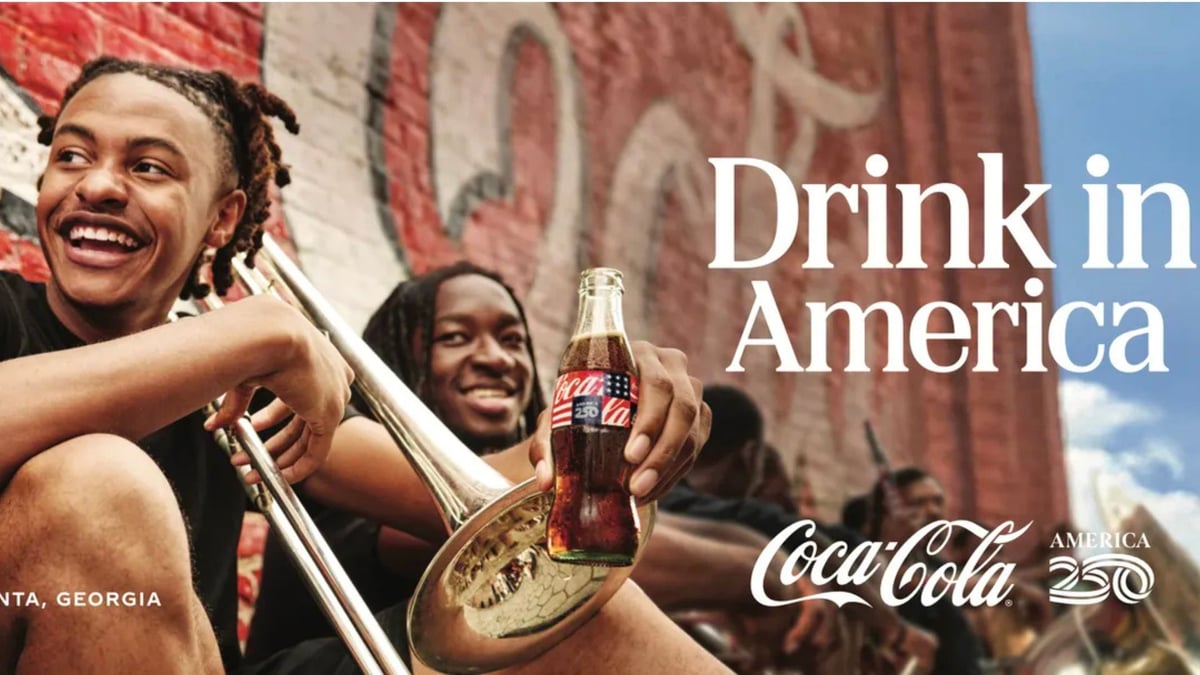
Coca Cola’s latest campaign, ‘Drink in America’ takes inspiration from its 1971 ‘I’d like to buy the world a Coke’.
The original was written on a white napkin by Bill Backer at Shannan Airport in 1971. “Famously, his flight to London was forced down by fog and he watched, from a seat in the terminal, as grumpily stranded passengers were handed bottles of Coke - and marvelled at how something immediately changed. The anger softened. Strangers smiled at each other.”
When the commercial aired in July 1971, the response was immediate joy. Radio stations were flooded with requests to play the song, and it became one of the most celebrated ads of the 20th century.
So Mark poses the question, why did Coca Cola remake one of their most iconic ads?
“It had one of the greatest ads in human history sitting in its archive, still fully intact, still culturally resonant, still emotionally loaded with more than half a century of stored warmth and memory. And Coca-Cola’s response was to remake it. To update it. To make it “of the moment.”
Although Coke had a genuine reason for recreating the commercial, the ‘Hilltop’ being a global ad featuring 30 nations and ‘Drink in America’ being explicitly national, it highlights our obsession with creative newness.
In fact, when System1 analysed 50,000+ video ads, they found no evidence that advertising loses its effectiveness with age. “The concept of creative wear-out - that audiences get bored and stop responding - is not supported by the evidence.”
As marketers, we see our creative day in, day out and we grow bored, too familiar, and hungry for something new. “I’ll bet Coke, literally bet them something, that if it ran the 1971 original back to back with their 2026 updated homage, there will be a clear effectiveness winner. And it won’t be the new version.”
When brands have as much history, heritage, and material that still resonates as Coca Cola do, they must fight to protect and use it, not remake it. Your long-term, emotional brand building depends on it.
It's not consumers who experience creative wear-out, it’s marketers. And data now proves it. Mark shared "the three factors of good creative", following his sold-out Cannes Lions talk last year.
Images (from top): Coca-Cola; Tada Images, andersphoto, komaart/Adobe Stock