

World Cup summer has started, what a time to be alive. But what team is Mark rooting for? As always, the one that understands and applies the fundamentals of good marketing
In recent news OpenAI has a new B2B CMO who looks like the best signing of the season. Unfortunately for him, the team is a strategically conflicted business with trust issues
Meanwhile, Duolingo has managed to alienate its most loyal audience and is blaming the platform algorithm for its declining daily average user growth.
And this round up wouldn’t be complete without some news from the World Cup. Fifa has made headlines with its dynamic pricing, which is delivering exactly what it was designed to for Fifa (profit), while empty seats tell a different story to the fans.
Lastly, a Kiwi defender gained 5 million followers in a number of days and taught every brand manager a lesson on the one thing they cannot recreate: humanity.
ADWEEK: OpenAI Needs Two CMOs Because It Has a Problem Marketing Can't Solve
Colin Fleming has recently been announced as OpenAI’s new CMO of Business, its B2B offering.
“Fleming is the real deal. Thirteen years at Salesforce, culminating as EVP of global marketing. Two years as CMO of ServiceNow, working wonders. He knows how to take a complex B2B product, build a brand around it, and drive pipeline.”
But, Mark argues one of the greatest B2B brand builders alive has his work cut out for him in his latest role.
OpenAI had a pretty shocking start to the year after its CMO, COO, Head of Product and a number of senior researchers left or took prolonged absence. That, combined with its $14 billion projected losses for 2026 (whilst preparing for an IPO), is not a stable position to grow a strong enterprise brand.
Second, OpenAI announced in January it would be running ads inside ChatGPT’s free tier. Whilst this doesn’t directly affect the enterprise tier, it raises questions around the trust and credibility of the brand - two crucial factors when trying to sell software to an enterprise buying committee.
“Salesforce and ServiceNow sold trust as their core proposition. Their customers willingly passed on sensitive data, critical workflows, revenue operations. The brand promise was: we will never screw you. That promise was credible because neither company faced a structural conflict between its consumer product and its enterprise product. OpenAI does.”
Last, but certainly not least in the list of systemic problems Fleming has inherited, is OpenAI’s dual-CMO structure. The business has split marketing into consumer and business to better appeal to its distinct audiences, but what it actually presents is a confused brand structure.
Fleming could well be the answer to all of OpenAI’s prayers, if the company is willing to address the strategic questions he will no doubt ask.
It’s clear Colin Fleming has some strategic roadblocks ahead of him as OpenAI’s new CMO, but his track record makes him the best person for the job.
Last year we pulled together some of the top issues reported by CMOs globally and how the MiniMBA in Marketing helps to tackle them. Read now: "A more strategic approach to marketing" – and other top challenges for CMOs
The Drum: Duolingo stupid to prioritize influencers over its unhinged owl 
Duolingo wasn’t always a household name. The brand’s awareness came from the unhinged, meme-style videos 23-year-old Zaria Parvez started posting of the brand’s green mascot on TikTok in 2021.
“She started posting in a manic, on-brand, off-the-radar kind of way. Duo stalked celebrities. Duo had public meltdowns. Duo took a shit and then sold its shit. Duo turned up at events uninvited and behaved badly. Within months, the account had millions of followers.”
But last month, the brand announced it was pivoting away from the very content that had contributed to its success. The reason? According to Duolingo, organic reach has declined and TikTok is increasingly pushing brands to pay for it.
“The brand that built the most effective social media presence in the recent history of corporate marketing has decided to abandon the thing that created all of that and pay strangers to pretend to like it on fake accounts instead.”
That social media presence delivered more than just vanity metrics for the brand. Daily active user (DAU) growth exceeded 40% from 2022-2025, revenue was up 40% year on year and paid subscribers passed 10 million.
What looked like silly, viral videos was actually consistent, distinctive brand building delivered extremely effectively and with little to no budget.
But the Duolingo success story came to a halt in April 2025 when the company announced it was replacing contract workers with AI - a move that cost them 400,000 TikTok followers in a matter of weeks.
“The brand that had built its entire appeal on feeling human, chaotic and authentic had just told its audience it was happy to automate the shit out of everything, including its humans.”
Duolingo’s DUA growth decelerated throughout 2025 and it expected only 20% growth in 2026. Still a great result for many businesses, but a result Duolingo had to explain in great detail after three years of 40%-plus growth.
Which brings us to today. Duolingo is blaming changes to TikTok’s algorithm for its pivot rather than facing the more obvious explanation. “Actually, Duolingo betrayed its audience and then killed the creative that had made them care in the first place.”
Duolingo has forgotten the most important part of marketing, the customer. Rather than understanding and listening to them, Duolingo’s brand managers have opted to blame the platform and creative that gave it wings in the first place. No comprendo.
Learn how to be truly customer oriented in Module 1: Market Orientation of the MiniMBA in Marketing.
The Drum: Empty seats mean dynamic World Cup pricing is working (for Fifa)

The World Cup kicked off last week and one of the biggest talking points surrounding the tournament were the sky-high ticket prices.
This is the first time Fifa is using ‘variable pricing’ at the World Cup. The rest of the world knows it as dynamic pricing and it’s usually experienced when booking flights, hotels or concert tickets.
“Prices move with initial demand and remaining inventory, up and down, match by match, the way an airline re-prices a Tuesday flight to Malaga.”
Whilst it has hit headlines, angered a lot of football fans and even resulted in an 18-page complaint from Football Supporters Europe and Euroconsumers to the European Commission, using dynamic pricing does make some sense.
For starters, the tickets went on sale last Autumn but it wasn’t decided which teams would play one another until the draw in December. Two football giants could face each other in a seemingly normal round-of-32 game, so having one fixed price for all games isn’t reasonable. “You cannot print a sensible fixed price for an opponent you cannot yet name. Dynamic pricing lets the number catch up once reality arrives.”
Dynamic pricing is also doing exactly what it is supposed to do, with Fifa expected to make $8.9bn from the tournament.
That aside, the ticket prices for this year’s World Cup have largely been seen as a failure, with 75 of the 104 games not selling out before the eve of the tournament.
“You can charge a fortune for a flight because the passenger has to reach Malaga. Nobody has to attend a football match. And if some seats are empty on your plane you don’t think the airline is failing, like you do at the World’s biggest event.”
When the three host nations bid for the tournament in 2018, they promised opening-match tickets from $60 and an average of $1,408. In reality, many of the tickets have reached north of $4,000, turning the World Cup into a private luxury instead of a unifying, universal passion, according to Euroconsumers.
Whilst UEFA have read the room and preemptively capped half of the Euro 2028 prices at €70, the other half will be determined by the all too profitable dynamic pricing, a pattern that we will continue to see, and pay the hefty price for, as consumers.
An important lesson for marketers. Pricing is the lever that drives profit. Not sales volumes, not cost cutting, certainly not advertising.
Learn how Mark Ritson helps marketers better understand, set and communicate their prices in Module 8: Pricing of the MiniMBA in Marketing.
The Drum: A viral Kiwi footballer made me realise brands will never get social
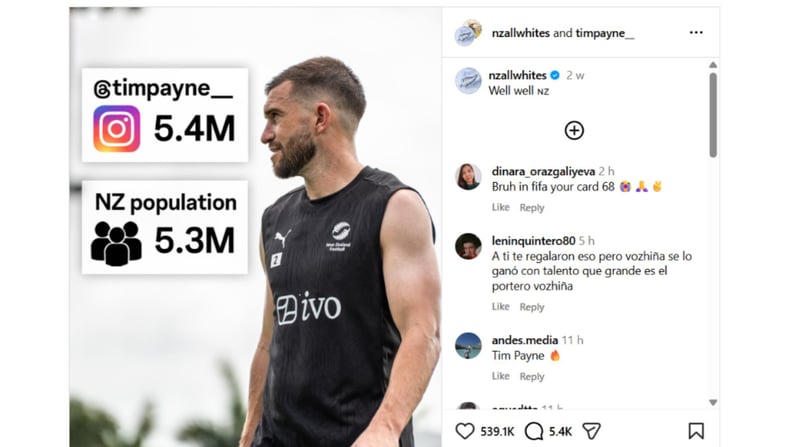
Two weeks ago Tim Payne was just a regular, little known defender for Wellington Phoenix, “a team you don’t know, in a league you have never heard of, in a country that has never won a match at a World Cup.”
That was until Valen Scarsini, an Argentine content creator decided to find the least popular football player at the 2026 World Cup, and make him famous as quickly as he could.
Payne went from 4,700 followers to 5.8 million in under two weeks. Numbers a 12-person brand team and 6 figure budget could only dream of.
According to Mark, this is an important reminder for brands that social media platforms are designed for people to engage with other people. And the very essence of humanity is building connection and affection with one another, not a yoghurt or cat food brand.
“The platform is for people, and the brand is not one. So it posts, and it boosts, and it begs for engagement, and it accumulates a following measured in the low hundreds of thousands while a man who plays in front of half-empty stadiums in Wellington romps past it in an afternoon.”
So what did brands do? They swarmed, commented and tried to get a slither of residual action from Tim Payne’s new found fame. This is how the influencer industry was made. “A person is loved online in a way a brand never will, but that love is then rentable by the post.”
Brands will try (and fail) to reach numbers like Tim Payne, so their next best bet is to buy those numbers in the most authentic way they can.
Brands will never be people. But understanding how consumers actually engage on social media, and where paid media and influencer marketing fits into that, is what sets properly trained marketers apart.
Explore Module 9: Marketing Communications in the MiniMBA in Marketing and learn how to build a communications strategy that works with human behaviour, not against it.
Images (from top): ymgerman/Adobe Stock, Tada Images/Adobe Stock, Maryna/Adobe Stock, instagram.com/timpayne__