
When CMO Geoff Bull enrolled on the MiniMBA in Marketing, he was looking for a framework that was channel agnostic and could position marketing as the team bringing strategic opportunities to the board
Almost 10,000 marketers have now taken MiniMBA as a team. And we’ve seen the results – check out some of our case studies to understand the impact MiniMBA team training can have on business results.
But we hear less about the reasons why marketing leaders choose to take and put their teams through MiniMBA training. For Geoff Bull, CMO at price comparison platform Confused.com, it was a combination of things: tactification, an evolving tech landscape and refreshing his knowledge in the marketing fundamentals.
He completed the MiniMBA in Marketing in September 2025 together with the CMO of sister company Uswitch, plus a few team members on each side.
The initial booking was somewhat of a trial run, he says. “We were thinking about whether this is something we can roll out for the group. And our reason for that is – to use the language of the course – because of how tactical life is day-to-day.
“As a group of people, MiniMBA can really improve your perspective and give you a common framework through which to think about what you’re doing.”
In the past, an ideal marketing career would look like this: start out as a junior in one part of the business and work your way around to get a rounded understanding of the whole discipline. So that by the time you reach senior decision-making level, you had the full picture. Marketing specialists were just that – not the norm.
“I know lots of people who haven't had that career path and they get to a senior role and they feel really exposed. They’ll say: I really don't understand this channel or this entire aspect of marketing.”
But today, says Geoff, “that’s just how it works. You can't have done everything, because it's too broad. That's where the MiniMBA in Marketing strategy framework is so valuable – because it works across the channels.
"it's a framework that lets you cross all of the channels."
“The focus on being really clear who the customer is, objectives per target customer, and positioning versus the competition – all that kind of stuff – it’s a framework that lets you cross all of the channels.
“And the outcome might take you into something you're going to do in cinema or with brand advertising or direct marketing... But you don't necessarily have to feel like you’ve done all of those channels in detail to get to that point. You can actually do it strategically.”
MiniMBA as a knowledge refresher
The MiniMBA in Marketing is not an entry-level course. Around 40% of a typical class makeup is senior management level and above. What it does do is re-ground experienced marketers in the fundamentals and remind them of the “prime directive” of marketing: bringing the voice of consumers into the business.
Like a lot of people in senior marketing roles, says Geoff, he’d had professional marketing training in the past. But over the course of time and as responsibilities grow, it’s easy for those core lessons to fade away into forgotten theory.
“I did a marketing degree 20-odd years ago, and so for a lot of what was in the course, I thought: I know this. I've done this before. But you just forget it. And you might go through years where you don't think about it. So it's very valuable from that perspective as well.”
It’s the same with his Heads Of, says Geoff. They are so caught up in the day-to-day that they only really think about the customer one or two days a year.
“They're at a point in their careers where they're really deep in the craft. If you're the head of PR, you just think about PR operations every single day, and maybe once or twice a year you're spending time thinking about who the customer is, what they need and how we're going to beat the competition.”
Fundamentals are even more important in a tech-forward landscape
Confused.com is a tech-forward business. Launched in the halcyon era of Web 1.0 in 2002, it was the UK's first-ever insurance comparison website.
Today, it deploys machine learning models, complex algorithms and AI-driven personalisation. But that only makes traditional, strategic marketing more – not less – important. You can move fast without breaking stuff. Marketing’s job is to bring the voice of the customer into the business – and whichever way you cut it, that’s where growth comes from.
“What can happen in a lot of companies is the marketing guys are holding the customer research file, then someone else is making decisions about who we're going after and what's our product strategy.
“The right way to do it is for the marketing team to be well trained so they can be in the room adding value, explaining what the research means, taking the product team through it. Otherwise, the product team will naturally fill the void and paint that picture.
“In lots of tech companies, product is king and it can be very product-led. Some do it really well and it’s very research driven and there’s a deep understanding of who the customer is. But it's more effective when it's balanced out with marketing being part of it.”
The danger in product-oriented companies is explored in the MiniMBA in Marketing product module. The idea of a USP has long since expired. Even if a company does come up with a unique product or service, it is very quickly and easily copied.
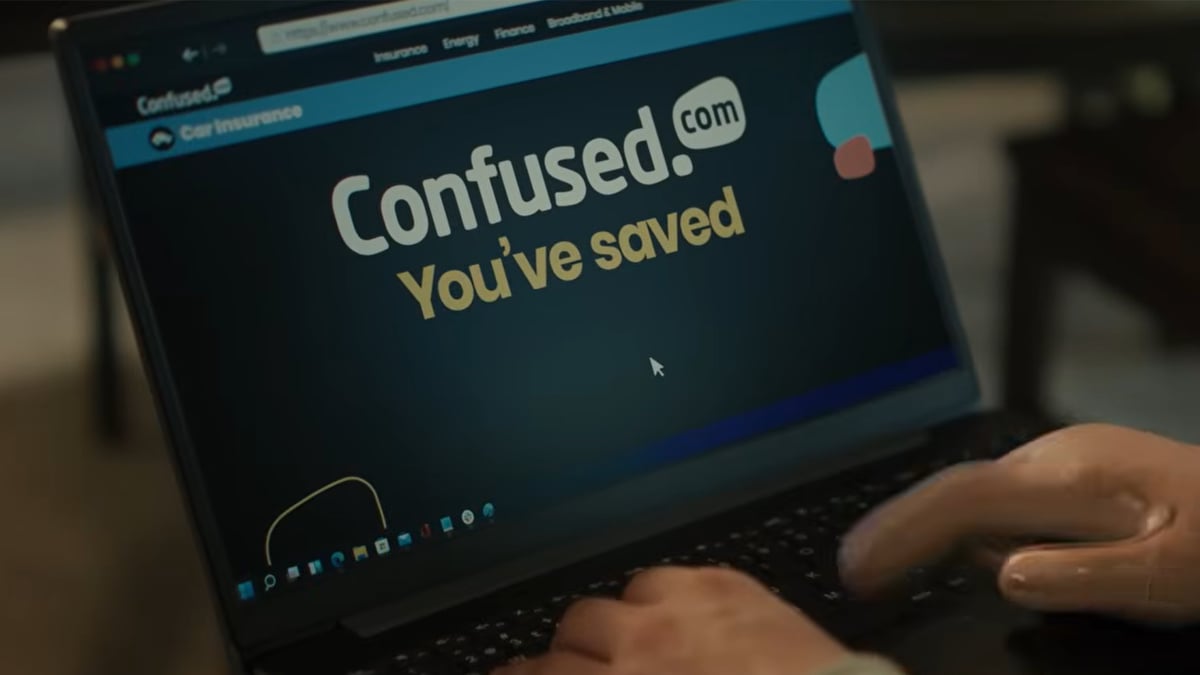
Confused.com might have been the first price comparison site, but today they exist within a hugely competitive landscape. The product is always improving, yes. But they also stay front of mind thanks to an award-winning brand team, who produce brilliant campaigns like the Just Used Confused series:
As the marketing and tech landscape evolves at a faster and faster pace – especially with the arrival of AI – the MiniMBA in Marketing framework is an anchor through moments of complexity, when things could feel overwhelming.
“The other thing that companies demand of marketing teams is the expertise. They expect that you really should know how an LLM works, or you really should know what the market size is or the target addressable market is for a category, or you really should know how SEO is going to work in the future when everyone is using ChatGPT…
“And so it's not only learning the craft, but the bar is high, the expectations are high that you should be answering all of these things.
“So again, that's why taking the course’s perspective – be super strategic and boil it back to who's the customer, what do they need – is a great framework through that.”
What I took from the MiniMBA in Marketing as a CMO
“My real motivation behind it was a mix of curiosity – will I learn something new? Mixed in with wanting a refresher. The MiniMBA puts it all together in a really great structure, which feels authoritative. It’s a nice way, if you've been kicking around for a long time, to go and check that you know everything.
“And there was stuff I'd never heard of before, like the Meaningful x Actionable Grid segmentation tool.
“I've done so much segmentation over the years but never heard of that. I started the team on a project with it the week I'd done that module. So it can be really, really practical. You can learn something and say okay, let's try it, let's make it. So, we did. It's really good.”
"I started the team on a project with it the week I'd done that module"
Some of the MiniMBA in Marketing learnings will naturally take a while to bear fruit. The course structure is taught as a complete framework that takes teams through a full year or marketing cycle – market research and diagnosis, strategy and tactical execution. Then how to take those learnings, apply them to the next year’s cycle and so on...
However, among the most common feedback from MiniMBA alumni is that there is also a huge amount of practical application from day one. Things like how to build a custom funnel or using perceptual maps to find a brand positioning that cuts through.
What could the business achieve long term with MiniMBA training?
While we wait for the full impact of the course to kick in, we wanted to know what Geoff hopes the business could achieve long term as a result of MiniMBA training on a team-wide scale.
“Having the organisation see marketing as being more of a strategic function would be good. Not for the sake of itself, but so that it builds trust and the organisation doesn't miss opportunities.
“It would be quite valuable if you had a marketing team that were trusted to be really solid on strategy and who were able to explain a market opportunity and how to go after it.
“In lots of companies that I've seen, that job is shared by the commercial team or the product team or the finance team – or the strategy team if it's a big company. But there's a huge opportunity for marketing.
“If you did everything on the course as a team, you would be that team who are providing the strategic opportunities to the board – and that would be cool.”
Interested in MiniMBA team training? Join leading global businesses like Google, Adidas, the BBC and Yakult. Contact our training team to find out more.
Cover: Confused.com / YouTube