
Four brands in the hot seat this week. Two are success stories, and two are marketing words of warning
This month Mark turns his attention to what separates the brands that live on from the ones that die out. The answer, as usual, comes back to marketing fundamentals. Knowing what your brand stands for, protecting what makes it distinctive and building genuine differentiation and demand.
Coca-Cola has been doing it for over a century without breaking a sweat. Swatch just pulled off one of the smartest co-branding moves in its category’s memory. Peloton discovered that selling the product is only half the job. And Ferrari, of all brands, forgot what a Ferrari is supposed to look like.
ADWEEK: Coca-Cola Is So Good at Marketing, Everyone Forgot to Notice
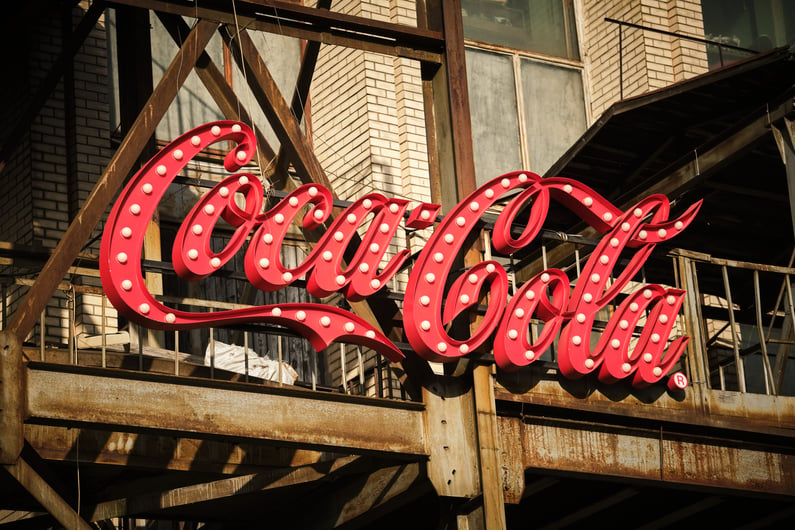
When Coca Cola’s former COO and newly appointed CEO, Henrique Braun, delivered the company’s first quarter results in March, no one batted an eyelid.
Net revenue increased 12% to $12.5 billion, operating margin expanded from 32.9% to 35% and free cash flow came in at $1.8 billion.
“It was the most boring quarter you will read about all year. It was also the best quarter most consumer brands could dream of.”
Even with GLP-1s (like Ozempic, Wegovy, and Mounjaro), sugar taxes and increased tariffs reshaping the beverage industry, Coca Cola march on. Each year more profitable than the last.
In moments of marketing praise and recognition, it’s easy to remember the viral products and disruptive marketing campaigns, but too often we forget to celebrate the quiet discipline and consistency of workhorses like Coca Cola.
“We stopped looking at the brand that, more than any other consumer business on the planet, demonstrates what marketing actually should be when done at scale with relentless consistency.”
Instead of reinventing its marketing model, Henrique Braun and all his predecessors have chosen to refine it. That is why Coca Cola is a case study of masterful consistency and one we should not overlook as an industry.
“This is what brand-building looks like when it is taken seriously across a generation rather than a campaign cycle.”
For more on Coca-Cola, read Mark’s three reasons they excel at marketing.
Or learn how you can also become a master of consistency and long-term brand building in the MiniMBA in Marketing.
The Drum: Swatch shows that co-branding is marketing’s most underrated growth lever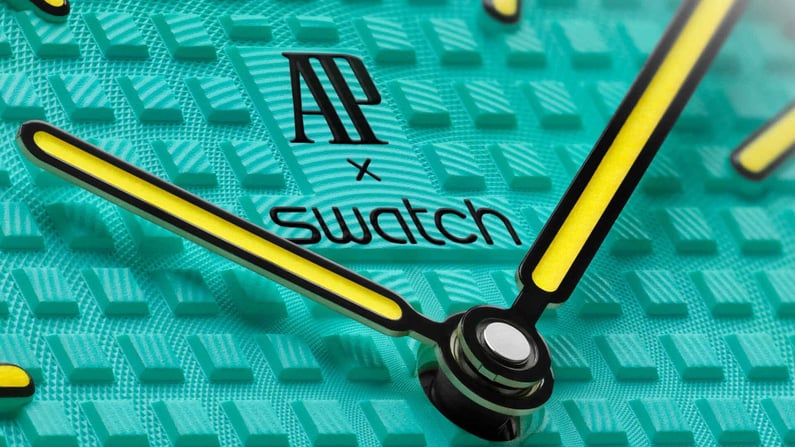
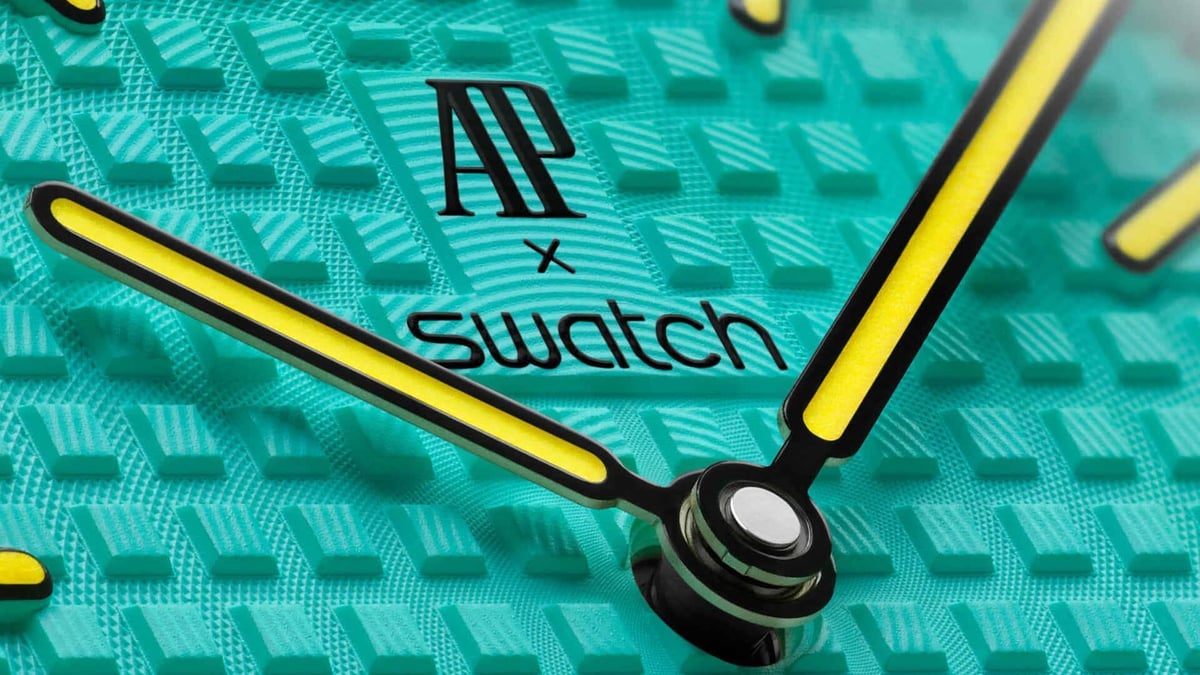
Another masterclass of brand management comes from Swatch and its recent collaboration with Audemars Piguet, the luxury Swiss watch brand.
The limited edition ‘Royal Pop’, a collection of pocket watches in eight pop-art colourways with a clip-on lanyard, featuring the octagonal bezel and exposed screws from AP’s infamous 1972 Royal Oak.
A collab between a brand known for plastic fashion watches and a luxury maison whose products start at $25,000 doesn’t sound beneficial for both parties, on the surface. But the $400 pocket watch represents an extremely successful case of cobranding, “executed at a scale and a level of brand risk the industry almost never attempts.”
First, the choice to design a pocket watch instead of a wristwatch was purposeful. “A wrist-worn budget Royal Oak would have sat directly in front of the real thing, inviting every collector to make the one comparison that destroys value: this looks like that, but cheaper.”
“AP gets the salience without the cannibalization. Whoever structured this understood brand at a level most marketers never reach.”
The collab reinforces Audemars Piguet as high-end and high-quality, whilst simultaneously being introduced to an entirely new generation of category buyers who may well purchase from them directly in the future.
On the other hand of this proverbial watch, Swatch gained credibility and legitimacy partnering with the likes of AP. “Swatch, a brand that has spent four decades fighting the perception that it is a toy, borrowed genuine horological credibility for the price of a clever movement and a teaser campaign in The Guardian.”
And that is the under-utilised, under-appreciated beauty of cobranding.
“Brand alliances, done with any strategic discipline at all, lift purchase intent, accelerate awareness for the weaker partner and reframe the stronger partner without diluting it.”
Mark argues that co-branding is one of the greatest brand tactics a marketer can use. But, it must be done right to be successful.
In Module 8: Brand Architecture of the MiniMBA in Brand Management, Mark teaches the structural relationships between brands and products, including managing brand portfolios, brand diversification and co-branding.
The Drum: Peloton built a ride or die brand. Guess what happened next

When the pandemic hit, Peloton revenue skyrocketed. Sales soared to $1.8bn in 2020, then rose again to $4bn in 2021.
“Gyms closed. Lockdowns began. People got fat eating biscuits under their masks. And suddenly Peloton’s $2,000 stationary bike, with its connected screen, streaming classes and charismatic instructors, looked like the future of fitness.”
Fast forward to today, Peloton is now worth less than $3bn, compared to the $47bn it once was. Mark Ritson claims Peloton died not once, but twice.
The first death: life went back to normal. Once gyms reopened, Peloton lost 143,000 paying subscribers in one quarter. And unfortunately for Peloton, most of its revenue came from the bike purchase, not the ongoing subscription model.
“Equipment sales were 78% of revenue in 2021. Today they’re 33%. It could no longer sell hardware. Everyone who wanted one had already bought one, and most didn’t use it.”
They succeeded at getting consumers to buy the bike but were unable to build a strong enough experience and community to warrant a monthly subscription. The company started losing money faster than it made it, reporting a staggering $2.8bn net loss in fiscal 2022.
So they cut back on operating expenses, staff costs, and eliminated product lines enough to avoid the chopping block.
The second death: the slow bleed. Whilst it has strong cash reserves of $1.1bn, that’s about as good as the story gets. Revenue will plateau or decline, and Peloton will be left in the early-2020s, like Atari for the 80s or Nokia for the 90s.
“You can have the best sales in the world. But without the pull, without real usage, real habit and real community, you’re just selling. Peloton understood the push. It didn’t understand the pull. And when the pandemic ended and people had a choice, they chose to leave.”
Peloton had mastered the push (selling exercise bikes), but they hadn’t figured out the pull, monthly subscriptions.
This is a case for setting clear marketing objectives and using a custom purchase funnel to see where your biggest leaks are. Without that, the hard work done during the push won’t translate into ongoing revenue. To understand why (and how), read: Stop using generic funnels – here’s how to build your own
ADWEEK: Ferrari Just Pulled a Jaguar
Ferrari may have just done some serious damage to their brand, by releasing a car that doesn’t look, feel or present like a Ferrari.
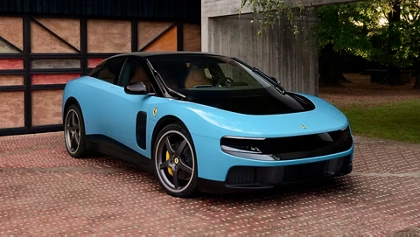
The Luce, Ferrari’s first fully electric vehicle, is missing some of the iconic characteristics of a Ferrari. A gentle silhouette, no suggestion of speed, the Prancing Horse barely visible, and the car unveiled in light blue.
“And the name itself, “Luce,” Italian for light, carries the weight of poetry and philosophy. It is the opposite of Ferrari naming convention. F40. F430. 812 Superfast. Superamerica. Names that announce themselves. Luce whispers.”
Mark suggests that brands often minimise their distinctive assets when entering a new category when in fact, they should be leaning into them with everything they’ve got.
Take Hermès. When it expanded into ready-to-wear, the instinct is to tone down on their distinctive equestrian assets to appeal to a broader audience, but they did the opposite.
“The brand didn’t abandon its DNA when it entered a new space. It weaponized it. The result: consistent critical success, absolute brand loyalty and clothes that look unmistakably Hermès.”
Apple did the same when they entered the watch category in 2015, keeping as many elements as unmistakingly Apple as possible.
When a brand does something that doesn’t feel or look like them, salience and loyalty are put into question. Distinctive Brand Assets play a much bigger role than how your brand looks. They send signals to your customers that says, “this is made by us”. Without them, your products, packaging, and marketing distribution will feel lost.
“They’re the thing that anchors the audience to what they know. Hermès understood it. Apple understood it. Burberry understood it. Ferrari and Jaguar didn’t. But consumers do. They didn’t reject the Luce because it’s electric. That’s a ridiculous idea in 2025. They rejected it because it doesn’t look like a Ferrari.”
When your brain or boss is telling you to tone down your Distinctive Brand Assets (DBAs), you need to politely say no.
Read more content from MiniMBA to learn more about DBAs (also known as brand codes), and how to build, test and best utilise yours.
Images (from top): FoodAndPhoto/Adobe Stock, Swatch, Tada Images/Adobe Stock, Ferrari