
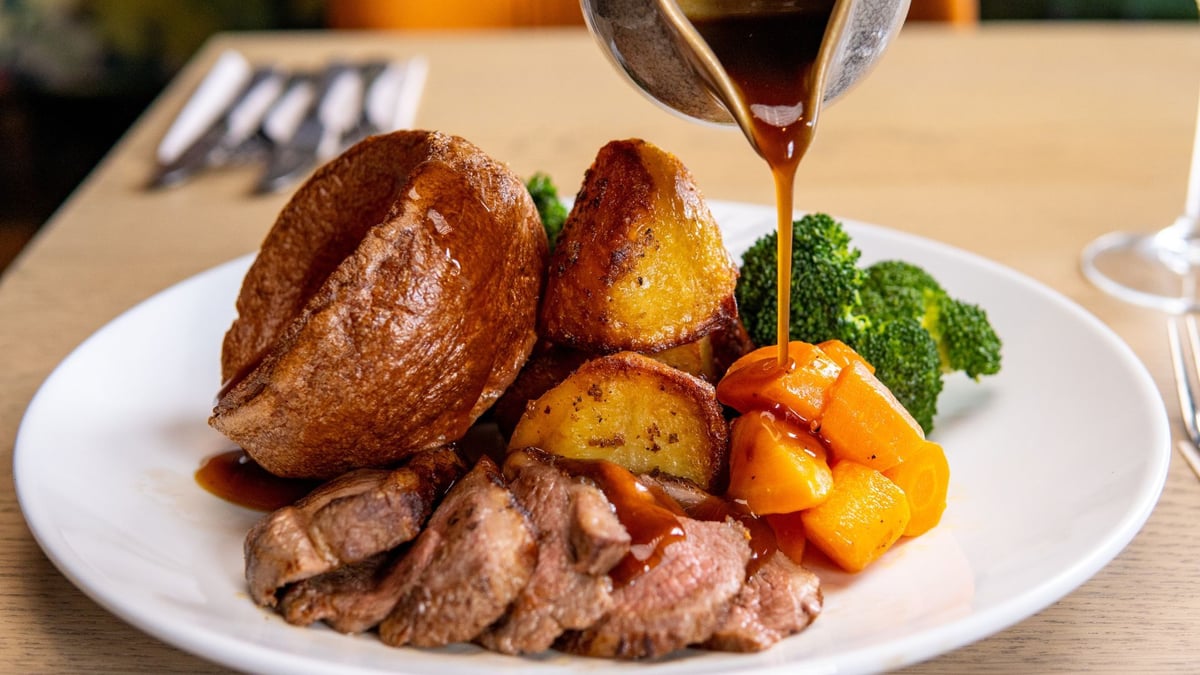
Like a good Sunday roast, omnichannel marketing is more than the sum of its parts. MiniMBA alumnus Peter Sumpton answers the question: what is omnichannel marketing, why it's different to multichannel, and how getting distribution right affects both the top and bottom line.
Omnichannel marketing is often confused with multichannel marketing – your brand appears in several places, but each channel largely operates on its own.
Omnichannel marketing is different. The clue is in the prefix: omni means all, everywhere, comprehensive and all-encompassing. In an omnichannel approach, channels are tightly connected, so the customer experiences one cohesive journey rather than a series of disconnected interactions. In practical terms, that means all channels, such as your website, email, app and in-store experience work in unison as part of the same journey, with consistent brand cues and smooth handovers across physical and digital touchpoints.
A good way to think about this is by comparing it to a Sunday lunch (or Thanksgiving dinner, for our American counterparts).
The chicken (other meats and plant-based substitutes are available) is just one channel used. It may be an important one, but it is accompanied by the roast potatoes, vegetables, gravy and stuffing, which act as additional channels that are just as important within the overall experience. Success does not come from piling more onto the plate. It comes from each entity doing its job and the whole meal working together in a way that makes sense.
A great Sunday lunch is coordinated. So is great omnichannel marketing. A strong website with weak in-store execution is like excellent chicken served with cold gravy.
Consumers already behave in an omnichannel way
Consumers already behave in an omnichannel way. They move between devices, platforms and formats without thinking twice. They might notice a brand on social, compare options on a laptop, read reviews on a mobile, then buy in-store or come back later through email.
Disney provides a powerful example of this, with their My Disney Experience app allowing guests to plan trips, buy tickets and reserve entertainment, while Disney Bands provide park entry, PhotoPass linking, Lightning Lane check-ins and room-charge purchases.
When touchpoints feel connected, the customer does less work. Friction drops, confidence rises and the brand feels more dependable. In their annual report and accounts 2025, John Lewis describes its “omnichannel retail estate” as stores, online, the John Lewis app and Click & Collect at more than 16,000 locations. Consumers do not think in channels; they think in tasks. In this case, searching, ordering, purchasing and collecting.
That is why omnichannel can be so effective. McKinsey reports that in some sectors, companies implementing omnichannel transformations have seen revenue growth of 5 to 15 per cent, alongside improvements in cost-to-serve efficiency of 3 to 7 per cent. The commercial logic is straightforward: when the experience is easier to navigate, customers are more likely to keep moving.
The commercial logic is straightforward: when the experience is easier to navigate, customers are more likely to keep moving
For any organisation, the pitfalls begin when omnichannel is mistaken for channel expansion. Adding a TikTok shop or phone line to the mix is not a strategy if each one operates in isolation. That is how you end up with the marketing equivalent of a disappointing roast: dull chicken, underperforming potatoes, not enough gravy and vegetables arriving ten minutes late. Customers notice that disconnect – prices feel inconsistent, stock does not match expectations, messaging varies by channel and moving from one touchpoint to another becomes harder than it should be.
The practical lesson is simple and discussed in further detail in the MiniMBA in Marketing – start with the customer journey, not the channel list. Define the role of each touchpoint. Keep the proposition and brand cues consistent. Then make the handovers invisible.
“The omnichannel experience can only take place when a retailer is able to encompass all those different commerce channels in a seamless way,” says Mark Ritson. Crucially, “the consumer and their data can move around, and the brand experience is consistent.”
That is omnichannel marketing. Not more noise. Just a better meal.
Does your distribution strategy pass the roast dinner test? If you need more food for thought, check out some more articles about marketing distribution. Or learn more about how Mark Ritson teaches distribution on the MiniMBA in Marketing.
Cover: Josh / Adobe Stock