
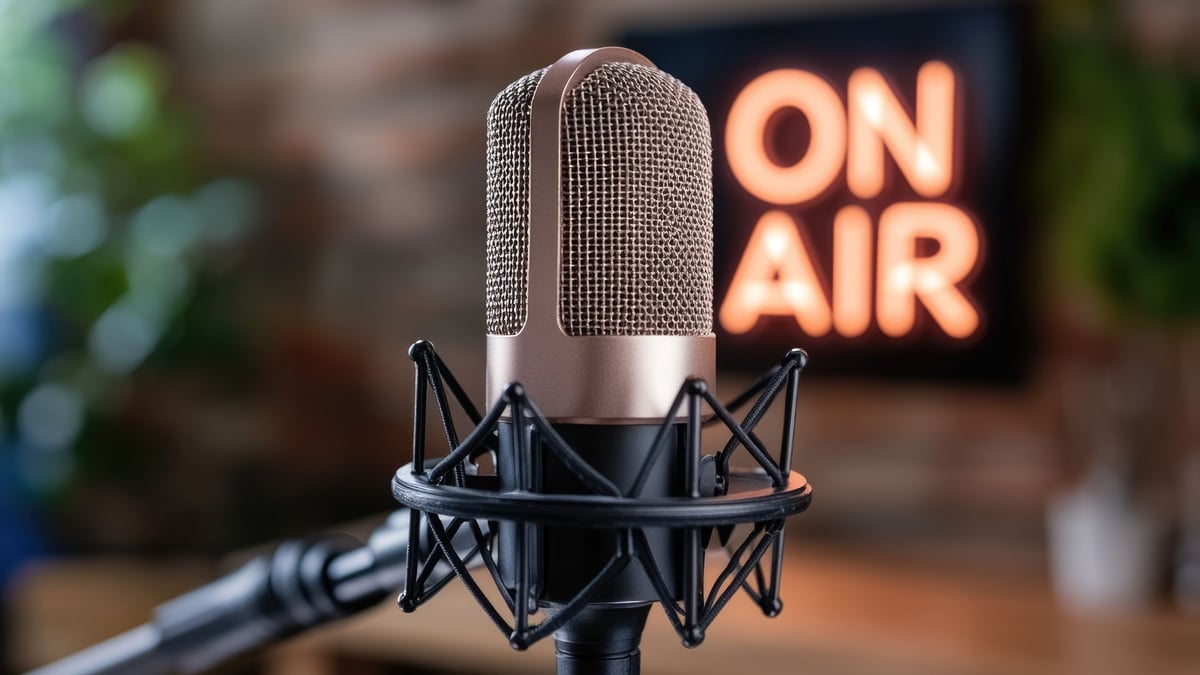
Don’t overlook audio as part of your media mix. Used well, it doesn't just add reach – it supercharges the return on every other channel you're already investing in
Great marketing often appeals to the senses. Sensory experience is, after all, how we perceive the world around us – and a powerful force in forming memories and associations.
But unless your audience is physically close to your brand or product, three of them are largely unavailable. Touch requires contact. Taste requires consumption. Smell requires proximity. That leaves sight and sound as the two senses that marketers can use reliably at a distance.
Too often, audio is added – if it is considered at all – as an afterthought when budgets and creative plans are set. This wastes one of marketers’ most powerful tools for creating emotion and building brand memory structures among consumers.
The diverse audio portfolio
“Audio” covers more channels than you may think, making it a versatile medium: broadcast radio, streamed radio, music streaming, podcasts, smart speakers and in-game audio, alongside jingles and other sonic devices that can travel across these environments.
Broadcast radio can deliver broad, repeated reach. Local radio adds geographic relevance and community familiarity. Streaming and in-game offers greater contextual and audience targeting. Podcasts range from highly specialised programmes to mass-audience entertainment.
Each format also has different measurement opportunities and limitations. Radio has established audience currencies, while streaming services tend to provide impression-level data. Podcast downloads, meanwhile, do not necessarily prove that an advert was heard.
As always, marketers should begin with the communications objective, not the format.
From micro-influencers to prime-time slots
Podcasts can operate like the micro-influencers of the audio world. A specialist programme may have a modest audience, but that audience has actively chosen the subject and returns to hear it discussed in depth.
Very few people walk into a Carpetright store unless they have at least some interest in buying a carpet. Similarly, someone listening to an industry-specialist podcast such as my own Construction Disrupted - focussed on UK construction - is unlikely to have arrived there accidentally.
Very few people walk into a Carpetright store unless they have at least some interest in buying a carpet
That creates useful options for smaller budgets. A business might advertise on a handful of podcasts that are highly relevant to its audience, sponsor a recurring feature or contribute genuine expertise as a guest or host.
At the other end of the market, a major radio station can resemble a prime-time television slot: substantial reach, prominent talent and a correspondingly substantial price.
Neither approach is inherently better. The right choice depends on the target market, communications objective and required scale, and available budget.
Audio makes the wider mix work harder
This is not an argument for abandoning television, outdoor, social or any other channel – it is exactly the opposite.
The principles of effective communications planning, as covered in Module 9: Marketing Communications, remain the same: allocating your communications budget across an appropriate mix of channels is almost always more effective for reach than concentrating it in one place.
Or as Mark Ritson puts it: “A x B is greater than 2A or 2B.”
Channels that add incremental reach and strengthen a brand’s positioning make ESOV (excess share of voice) work harder. In this case, more is more.
Recent analysis by the Advertising Council of Australia (ACA) found that campaigns with positive ESOV that allocated an average of 11% of spend to audio triggered a disproportionate effect across every key brand and business measure.
At this 11% sweet spot, brands saw stronger effects across customer acquisition, distinctiveness and emotional appeal.
At this 11% sweet spot, brands saw stronger effects across customer acquisition, distinctiveness and emotional appeal
The data was analysed by independent marketing consultant Rob Brittain and presented by Mark Ritson at HEARD 2026, who said: "Audio is the catalyst in the media mix…You're not spending more - you're making everything you already spend work significantly harder."
Different channels reach different people in different contexts and reinforce the same positioning through different sensory routes.
Consistency across those routes matters too – a recognisable voice, musical device or sonic code can strengthen impact across the whole mix. Read more in: “Consistency pays double when it comes to brand codes”
Audio works best when it's planned alongside visual channels from the start
Audio is not a replacement for the wider media mix, and not every audio format is right for every brand. Its value lies in adding incremental reach, accessing valuable listening occasions and reinforcing the same positioning through another sensory route.
Plan it alongside visual channels from the outset. The data suggests that when you do, the rest of your communications investment works significantly harder.
For more on what makes advertising work, read "Mark Ritson: Data finally shows us the 'three factors' of good creative"
Or find out more about how MiniMBA teaches marketing communications for yourself and for your team.