
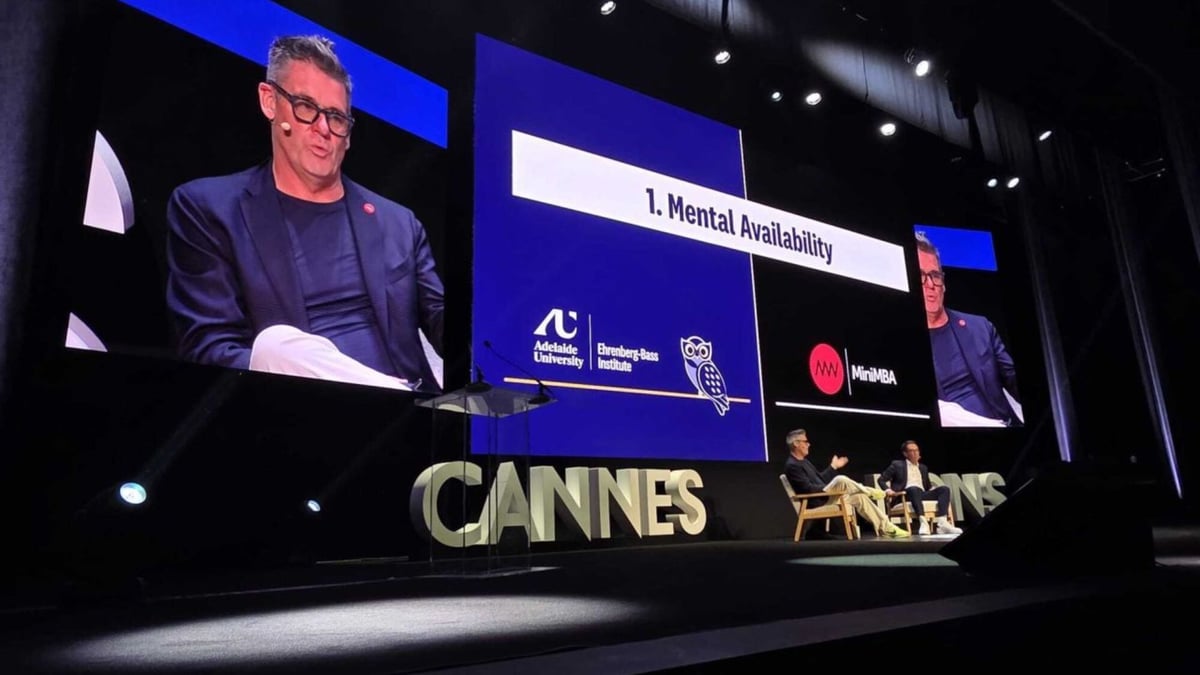
If you live under a rock or don’t have LinkedIn (because they are the same thing these days), you may have missed that last week was Cannes Lions International Festival of Creativity…
For those readers who are familiar with Mark, you might remember a time when he was loudly and explicitly ‘anti-Cannes’.
Whether it’s the heat getting to him or the 40,000+ MiniMBA Alumni, many of whom he gets to meet and speak with during the festival, Mark has turned over a new leaf.
Either way it’s great news for us because it means we have some Cannes-related content to talk about for a change.
Here’s what Mark got up to last week…
The Drum: Claude is my Cannes bartender. My AI agent is favoring established brands

When Mark arrived at his hotel in France last week, he was (and I quote directly) “immediately taken with the idea of a cheeky Campari spritz”.
After swiftly finishing his first drink, Mark turned to Claude to see what he should drink next, a Boulevardier for those interested.
According to OpenAI, 800 million people are turning to ChatGPT every week, which begs the question for marketers; will the subconscious power of brand hold up in buying decisions as our access to instantaneous product information increases?
“The machine browses, compares, reads the reviews you were never going to read, weighs the specs, checks the price across a dozen retailers and hands you an answer. One answer.”
Of course, this is not a new question. The book What Really Influences Customers in the Age of (Nearly) Perfect Information was published 12 years ago, and Scott Galloway has been calling Google and Amazon reviews “weapons of mass diligence” and claiming “the era of brand is over” since the last World Cup.
Except, with AI, that’s not what’s happening.
Yes, the role of brand is to build salience and associations at the point of purchase. Whilst AI lessens that subconscious reaction, brands play an equally important role for consumers. They save us time.
“People did not read 14 reviews before buying toothpaste. They bought the toothpaste they had heard of. Perfect, almost unlimited information arrived and produced overwhelmed shoppers, drowning in tabs and reaching gratefully for the name they recognized.”
Here’s where it gets interesting. The AI agents aren’t blind to branding. In fact, they overwhelmingly favour big, well-known brands.
“It makes sense when you remember what these models are. They are vast prediction engines trained on the open web, and the brands that appear most often, most favourably, in the most places are the brands the model has effectively been taught to trust.”
Brand won’t be irrelevant in the new era of search because the biggest, most well-known brands have the most, wide-spread information for the LLMs to feed on.
instead of wondering if brands will survive, the industry is pivoting from Share of Voice to Share of Model
So instead of wondering if brands will survive, the industry is (understandably but in classic marketing fashion) pivoting from Share of Voice to Share of Model.
“The question now is where you rank when the machine simply names a brand, unprompted, as the answer. Search gave you 10 links and a scroll. The agent gives you one answer, maybe three. You are the answer, or you are invisible.”
AI is fundamentally changing the consideration phase of the customer journey and how customers search for information online. But having a strong, differentiated and distinguishable brand remains crucial for mental availability, because customers are intrinsically lazy.
The MiniMBA in Brand Management is the most advanced, practical training on how to manage, grow and protect a successful brand. Download our course brochure to learn more about the course and be the first to hear about our September intake.
Cannes Lions 2026: Five marketing truths we can actually agree on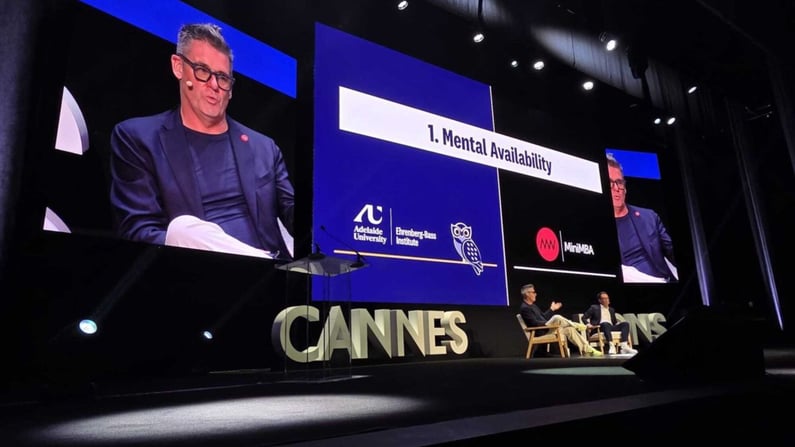
Picture this. It’s a sweltering Monday afternoon in the French Riviera. Mark Ritson and Byron Sharp, historic marketing rivals, have just taken to the stage at Cannes Lions International Festival of Creativity to talk about *checks notes*... five marketing truths they agree on?
For those of us marketers fortunate enough to be in the room (not me), I’ve been told it was 30 minutes of pure, unadulterated marketing history in the making. Here are the five areas they discussed. Five issues that marketers can and should act on with confidence.
-
1. Mental availability is key.
The number one job for a marketer is to make their brand come to mind during purchasing moments. Marketers see and think about their brand eight hours a day, whilst your customers only experience it for a few seconds, so simply being remembered is crucial.
-
2. Distinctive Brand Assets are your superpower.
Creating a brand that, as Sharp puts it, “looks like itself” is the quickest way to being recognised, remembered and ultimately chosen. Your Distinctive Brand Assets (DBAs) should be a tight set of 3-4 assets (logo, colours, shapes and sounds) used consistently across every touchpoint. Don’t refresh them when you get bored of looking at them, let them compound over years.
-
3. Sophisticated mass marketing beats tight segmentation.
Mark’s view on sophisticated mass marketing has changed over the years but one thing has always stayed the same; reaching as much of the market with brand marketing is the best way to achieve sustained growth. Whilst understanding your market and the categories of buyers within it is important, narrowly targeting small segments of the pie and neglecting the rest will result in short-term gain and long-term loss.
Mark encourages marketers to adopt a two-speed model; mass brand building for the 95% not in market combined with targeted activation to convert the 5% who are ready to buy.
-
4. Your brand purpose is not important to your customers.
Sharp and Ritson both agreed that brand purpose rarely shows up when customers explain why they bought something. Unless your brand or product is directly linked to a wider purpose, stop wasting time on it.
-
5. Campaign wear-out is a myth.
Research from WARC shows an average campaign length is just 30-40 days, yet studies on effectiveness and longevity suggest campaigns could and should run for years.
Here’s what Mark said when Amazon revived it’s 2023 Christmas ad, Joy Ride: “Make fewer ads. Make better ads. Spend more on initial creative. And more on testing to get them right. Then run them for longer, ignoring the frenetic energy of those telling you to create more content all the time.”
Ritson and Sharp gave clear, evidence-based advice at Cannes last week, but how many marketers will keep these practical changes once the hype of Cannes has worn off?
Mark reinforces and actively teaches how marketers can overcome crucial issues like these in the MiniMBA in Marketing.
MiniMBA: Appreciating Audio: Why radio & podcasts deserve more attention
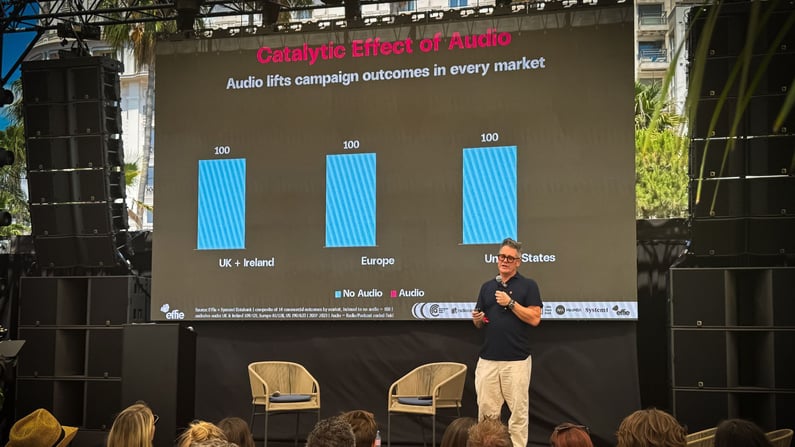
While Mark was in Cannes last week, he delivered a session on the power of radio and podcasting as a catalyst for growing trust and profit.
Combining data from audio industry bodies in the UK, Ireland, Australia and USA with studies carried out by Effie and System1, Mark made the case for including audio in your advertising mix.
His findings? Campaigns with audio outperform those without.
We know from existing data that the more channels used, the better the campaign performs. According to the research presented by Mark, including radio as a medium increases market acquisition by 19%.
Audio also has an interesting impact on pricing, with campaigns including radio experiencing dramatically reduced rates of price sensitivity. It’s important to mention at this point that price is the key driver of profit, not volume or cutting costs.
Next is trust, System1’s research shows campaigns with radio have a higher brand trust perception. Whilst this is not surprising, as traditional mediums like television and radio naturally outperform social media in terms of trust perception, it highlights an opportunity that not enough brands are making use of.
When it comes to advertising, creating an emotional response (whether that’s laughter, happiness, pride, fear) gives your ad a 27% higher chance of being profitable. Again, this isn’t rocket science. When dealing with customers who don’t care about your brand, making your audience feel something is incredibly important, and audio goes a long way in creating emotion.
The next step is your Distinctive Brand Assets (DBAs). If the aim of the game is mental availability, which we know it is, Jingles and Sonic Device (think the Netflix ‘Ta-Dum’) are amongst the most effective DBAs in bringing a brand to mind.
The final lever in creating effective ads and campaigns is longevity. The average campaign is 30-40 days, yet System1 research tells us wear out is a myth and good, cohesive campaigns with emotive ad creative can and should run for years.
Emotion and longevity are key. Pair these with an unrelenting use of your DBAs, so your brand looks like itself then add jingles and sonic device, since audio naturally evokes emotion and mental availability.
Audio is one of the most powerful tools a marketer has to build emotion and brand memory, but it is often overlooked or added as an afterthought. Mark suggests marketers cut a small slice of their advertising budget out for audio.
Read more on how audio is your secret weapon when it comes to increasing the effects of ESOV.
Images (from top): Cannes Lions 2026, Tada Images/Adobe Stock, Maryna/Adobe Stock, instagram.com/timpayne__